When is your Benicia street getting fixed? Find out.
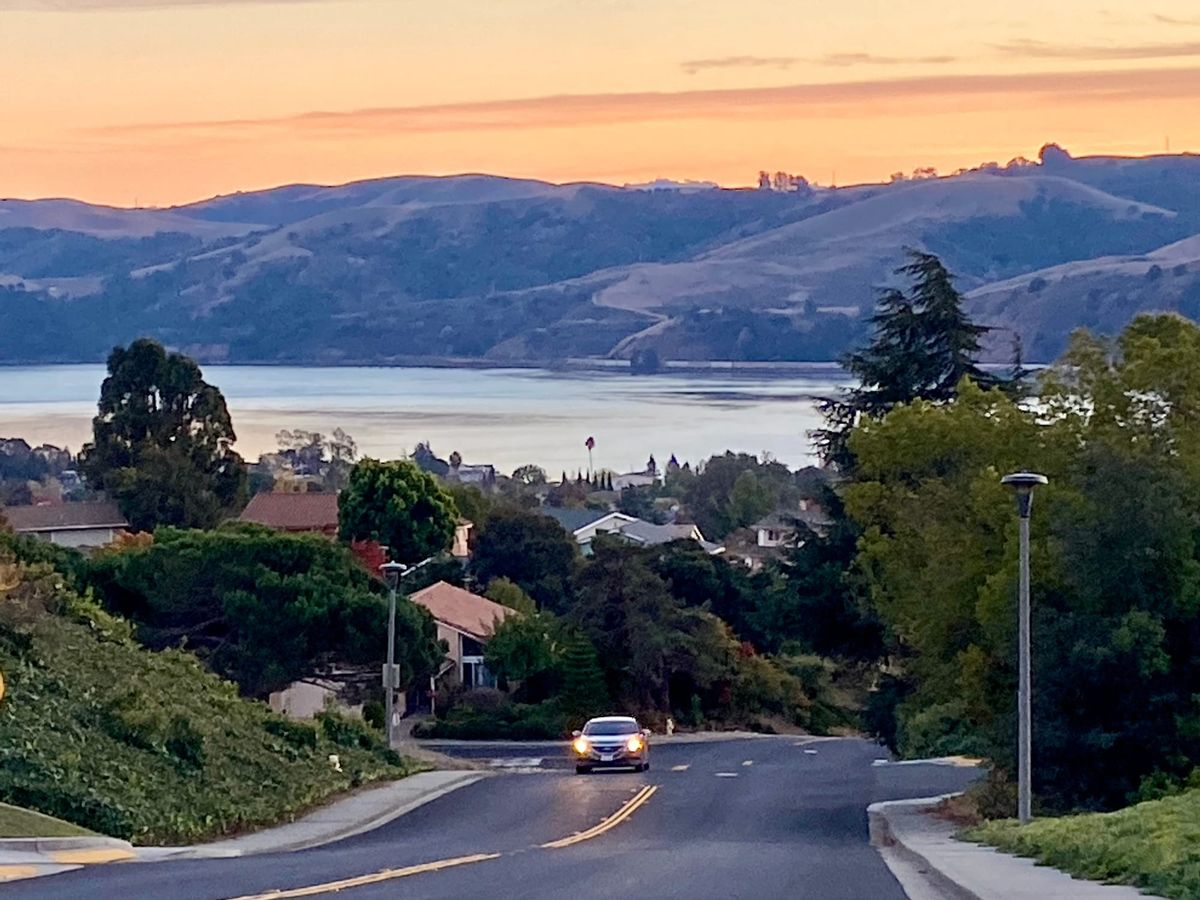
Recent sales tax increases will help fund about $5.5 million in annual street paving over the next four years across most of Benicia.
Why it matters:
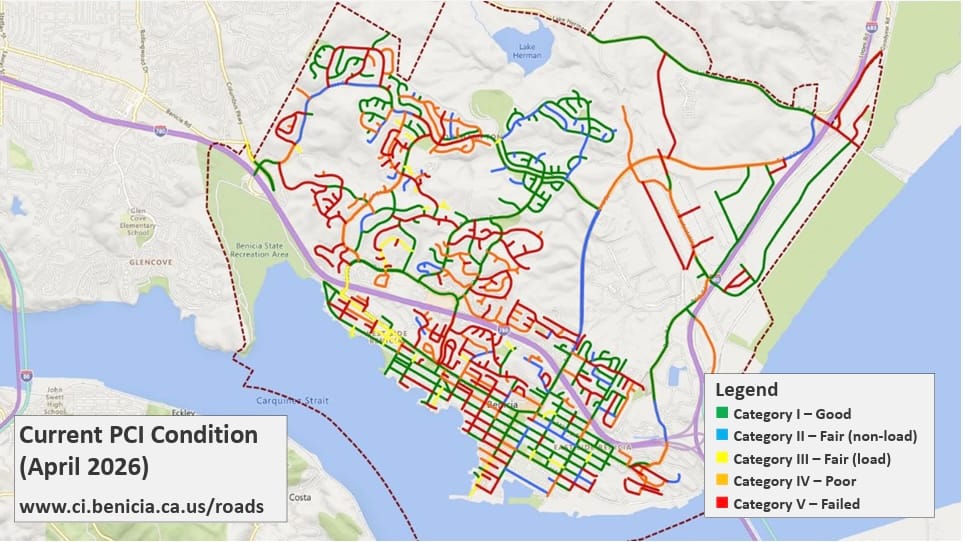
- Benicia’s 198 miles of city streets received a D grade in 2026, scoring 52 out of 100 on the Pavement Conditions Index, a scale widely used by civil engineers to grade road conditions.
- The regional planning agency, the Metropolitan Transportation Commission, considers streets with scores of 60 or below to be at risk of rapid deterioration.
- Deputy Director for Public Works Neil Leary estimated the city has $64.3 million in deferred maintenance on city streets.
When will the road works start?
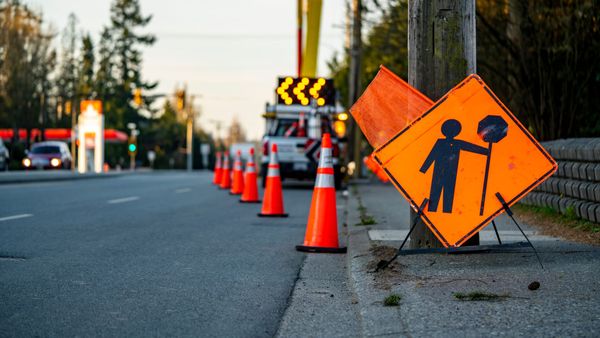
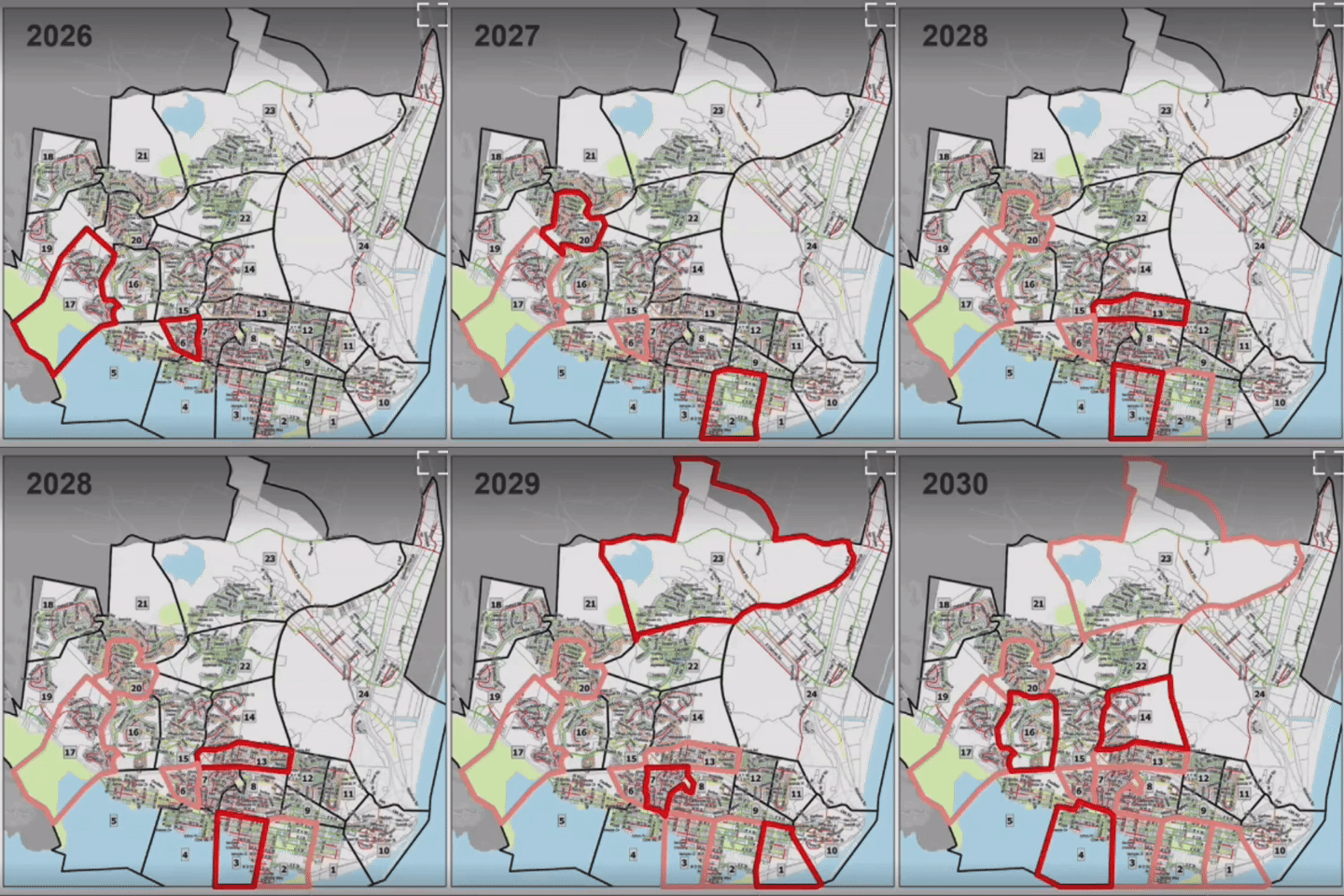
- Repairs are expected to begin in June in areas around Drolette Way, Cambridge Drive, and sections of Rose Drive.
- Benicia officials divided most of the city into 24 zones.
- An additional two to four zones will be repaired annually.
- Some busier roads, like First Street, may see repairs to one side of the street before the other to minimize traffic disruptions.
Go deeper: Residents can look up when their street is slated for repairs here.
Where’s the money coming from?
Recent sales tax increases will help fund about $5.5 million in annual street paving over the next four years across most of Benicia.
- In November 2024, about 62% of voters approved Measure F, a half-cent sales tax earmarked for repairing the city’s streets and sidewalks.
- The citizen-sponsored measure is estimated to generate $4 million annually.
- That funding will be combined with the city’s roughly $1 million annual road maintenance budget, which is partly funded by California’s gas tax.
The big picture:
The money ushers in Benicia’s first comprehensive plan to fix the town’s faltering roads.
“The boost from Measure F is going to allow the city — for the time ever — to develop a long-term, comprehensive plan to fix our roads and reverse a multidecade decline in our roadway conditions,” Public Works Director Danielle Martinez explained at the May 5 City Council meeting.
Potholes still getting you down? You can submit a request to repair potholes, damaged trees, graffiti, or other issues for attention through Benicia’s SeeClickFix portal.
What’s next:
The city is planning changes to First Street starting in 2028, including parking restrictions to comply with California’s recently introduced “daylighting” parking law.
- The law prohibits parking within 15 to 20 feet of a crosswalk to improve pedestrian visibility and reduce accidents.
- Other potential downtown changes — pending public comment — could include:
- diagonal parking on East Second Street,
- improved bike lanes and parking on First Street,
- paving the large dirt and gravel parking lot near the corner of First and East B streets.
- Council Member Lionel Largaespada noted that the parking lot — designated for housing — sits in a floodplain, which may increase paving costs until it is developed.
Could there be hope for streets left off the list?
City Council members asked officials to review what it would take to add two streets to the planned five-year maintenance schedule:
- a portion of West I Street, and
- Bayview Circle is home to the Benicia Housing Authority’s Capitol Heights affordable housing complex.
The request followed impassioned pleas from West I Street residents and, in the case of Bayview Circle, Councilmember Lionel Largaespada. Until relatively recently, the City of Benicia believed the Benicia Housing Authority was responsible for maintaining Bayview Circle. After learning it was a city road, officials repaired potholes on the street.
“We take that feedback seriously, and we will look at how we can accommodate it as best as possible within the technical systems we have in place,” said City Manager Mario Giuliani. “We want to avoid the slippery slope of someone coming to the podium and becoming the squeaky wheel that gets funded — that would be a horrendous way to govern. But it would be equally horrendous if we ignored the voices of our residents when they come here and say, ' Come back in five years.’ We are neither of those things.”